


An existing UCC-1 lien often feels like a locked door when you need new business funding, yet the door is rarely sealed. Uniform Commercial Code (UCC) filings signal that a prior lender holds a security interest in some or all of your assets. However, they do not automatically block additional credit facilities, and lenders work around them every day.
Understanding how liens stack, how priority shifts, and which products ignore blanket filings gives you room to grow. You will see how subordination, intercreditor agreements, and collateral carve outs open capacity. You will also learn where unsecured tools can fund your business without touching the existing lien at all.
Can You Get Business Funding With an Active UCC Filing?
Yes, an active UCC filing does not disqualify your company from additional credit. Options include subordination agreements, intercreditor arrangements, collateral carve outs, and unsecured products like early pay programs. Approval depends on lien scope, the new lender's collateral needs, and cooperation from your existing secured party.
Reading Your Current UCC Position Before You Apply
Start by pulling a fresh UCC search from your Secretary of State to see every active filing. Note whether each filing is a blanket lien on all assets or a specific lien on one class, such as equipment or receivables. According to Crestmont Capital, a blanket lien claims some or all of your assets and pushes new lenders into second position.
Old filings often outlive the debt they secured, which distorts what lenders see when they underwrite you. A financing statement lasts five years under Article 9, and paid-off lenders rarely rush to file a UCC-3 termination. As a result, you may need to chase written termination letters before applying for new business funding.
Consider the following review steps before you approach a new lender:
- Match every UCC-1 on file to an active loan balance on your books.
- Request UCC-3 termination statements for any lien tied to a paid-off obligation.
- Identify which assets remain unencumbered and could serve as fresh collateral.
- Confirm whether merchant cash advance filings show blanket authorization language.
A clean lien profile shortens underwriting and often improves pricing on the new facility. Meanwhile, an outdated profile invites requirements letters that delay closing by weeks. You can review adjacent working capital tools on our how it works page while you clean the file.
Subordination Agreements and Intercreditor Arrangements
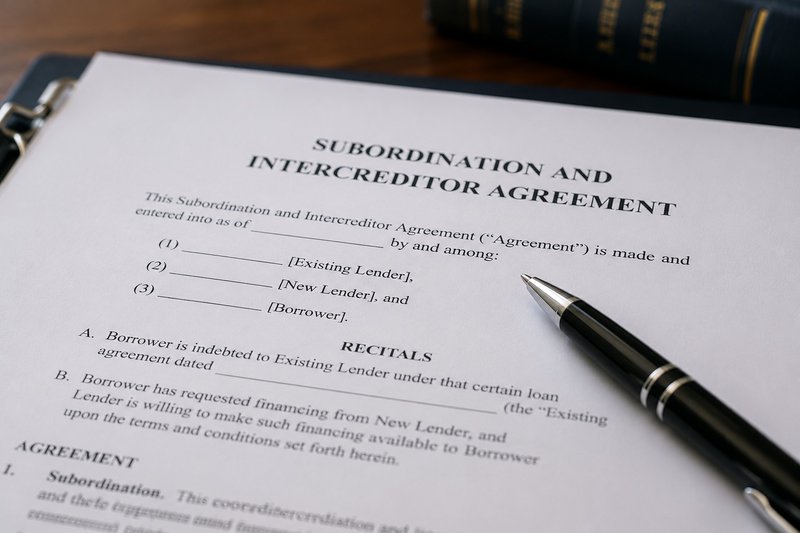
Subordination lets an existing senior lender keep its lien while stepping aside on a defined class of collateral. According to AllBusiness, no new lender can make a secured loan until the first lender subordinates or signs an intercreditor agreement. Article 9 of the UCC formally allows this reordering by contract under section 9-339.
Intercreditor agreements work in the same direction but split collateral between two secured parties who both file UCC-1 statements. One lender takes first position on receivables, for example, while the other takes first position on equipment. Both filings sit on the public index, but the private contract governs actual priority and remedies.
Timing matters more than most borrowers expect when pursuing either document. Send the subordination or intercreditor request the week you apply for new business funding, not the week you clear underwriting. Include a term sheet, use of proceeds schedule, and current UCC search in the first package to avoid a requirements letter.
Legal fees vary, but both lenders typically need counsel to review and sign. See our blog on financing costs for related planning notes.
Collateral Carve Outs and Specific Asset Financing
Carve-outs release a defined asset from a blanket lien so a second lender can attach a first position security interest to it. Equipment loans, vehicle financing, and real estate mortgages often use this structure. The senior lender keeps first position on everything else, and the new lender takes priority only on the carved out asset.
Consider these common carve out scenarios that unlock business funding without a full refinance:
- Titled equipment such as trucks, trailers, or manufacturing machinery with clear serial numbers.
- Real estate held by the operating company or a related entity.
- Specific inventory lines segregated from the general asset pool.
- Purchase money security interest (PMSI) filings for newly acquired goods.
According to SMB Compass, negotiating a specific collateral UCC lien rather than a blanket lien protects equipment, inventory, and real property for future loans. Furthermore, PMSI liens under Article 9 can achieve super priority on the specific asset financed when properly perfected. You can compare adjacent product coverage on our electronic payments page when planning the stack.
Unsecured Options That Ignore Existing UCC Liens
Some funding sources do not file UCC-1 statements at all, which sidesteps the entire priority negotiation. Unsecured early pay programs, buyer-funded supply chain finance, and certain trade credit lines fall into this group. Because the buyer or the platform funds the discount, there is no security interest attached to your receivables, inventory, or equipment.

For suppliers, an unsecured early pay platform lets your customer approve the invoice and pushes payment within 24 hours. Meanwhile, your existing lender keeps its blanket lien undisturbed, and you avoid the two- to four-week subordination cycle. Non-recourse structures also mean the platform absorbs buyer nonpayment risk rather than pushing it back to you.
Freight brokers, mid market suppliers, and international vendors often use this path alongside a traditional line of credit. Review the freight broker page and the international buyer page to see fit by segment.
Ready to Unlock Business Funding Around Your Existing Liens?
Working through UCC filings, subordination requests, and carve-outs takes coordination among your current lender, your new lender, and legal counsel. However, the process is routine when you start early, present a clean lien profile, and match the right product to the right collateral. Unsecured early pay adds another lane that bypasses lien negotiations entirely.
Our team helps suppliers and buyers structure working capital that fits alongside existing bank lines, factoring facilities, and equipment loans. We fund domestic and international invoices without filing UCCs or taking security interests in your assets. To review your options, please get in touch with our team for a funding consultation.
